

It’s often said, “Seek your path in software commerce. If you create, you can sell; if you market, you can resell.”
If you have an existing client base, industry expertise, or a strong network, and you want to build a business with real recurring income without product development overhead, software reselling is worth understanding carefully.
The model isn’t new. Companies like Google, Microsoft, and Salesforce, and nearly every major vendor in the world, rely on reseller networks to grow faster than they could through direct sales alone.
What is new is how accessible the model has become for independent entrepreneurs, agencies, and freelancers.
So, let’s uncover everything you need to know about becoming a software reseller.
Is the Software Reseller Business Model Worth It? Understanding the Potential
As we know, not every software business needs you to build the product - some of the biggest opportunities lie in reselling.
The software reseller business model involves purchasing or licensing software from a vendor, then distributing it to end customers at a markup or on a commission, often bundled with services such as setup, onboarding, training, or ongoing support.
It sits at the midpoint of the software distribution chain:
Software Vendor → Reseller → End Customer
The vendor wants distribution. The customer wants a trusted local expert who can implement and support the product. The reseller provides both and earns from the gap.
Three Things That Make the Model Work
No inventory, no warehousing. Software is digital. Your "stock" is a partnership agreement and a login dashboard.
Recurring revenue. SaaS subscriptions renew monthly or annually. Every client you onboard keeps paying, and so does your commission.
Leverage your existing expertise. A marketing agency reselling marketing software, a recruiter reselling HR tech, or an IT consultant reselling cybersecurity tools. The niche you know becomes the unfair advantage that closes deals faster.
Why the Timing Is Right in 2026
- The global Software Resellers Market grew to USD 2.27 billion in 2026, and is projected to reach USD 3.63 billion by 2035, with a CAGR of 5.36% from 2026 to 2035.
- Around 64% of enterprises increased software procurement through resellers to speed up their digital transformation.
These statistics suggest that people want a trusted advisor who understands their industry, not another cold email from a vendor's SDR. That trusted advisor role is exactly what a software reseller fills.
Still exploring the basics? Start with our complete guide to the software reseller model and how it works.
Exploring the Types of Software You Can Resell
You can resell virtually any category of software, but the most profitable resellers pick one niche and go deep, rather than selling everything to everyone.
Here is a breakdown of the main categories, with what each offers a reseller:
1. Productivity and Collaboration Tools
Examples: Microsoft 365, Google Workspace, Slack, Notion, Zoom
These are table-stakes products that almost every business needs. Margins tend to be thinner (10-20%) because competition is fierce, but volume is high, and churn is low. Best suited for IT consultants and MSPs with large client bases.
2. CRM and Sales Tools
Examples: Salesforce, HubSpot, Pipedrive, Zoho CRM
High implementation complexity means resellers can charge significant service fees on top of license revenue. If you have a background in sales operations or RevOps, this category can generate strong blended margins of 35-55% when implementation and training services are included.
3. Marketing and SEO Platforms
Examples: GoHighLevel, DashClicks, ActiveCampaign, GetResponse MAX
Marketing agencies are the primary resellers here, moving beyond simple referrals to white-labeling entire platforms. These programs offer margins of 30–50% on software licenses, which agencies bundle with fulfillment services to build proprietary-branded ecosystems.
Unlike affiliates, resellers maintain full ownership of client billing and use sub-account structures to drive long-term, high-retention Monthly Recurring Revenue (MRR).
4. AI and Chatbot Platforms
This category is growing faster than any other in the reseller market. Businesses in every sector, e-commerce, healthcare, real estate, or education, are actively looking for conversational AI solutions they can deploy without building in-house.
AI chatbot platforms are particularly attractive for resellers because:
- Setup is no-code or low-code, reducing service complexity.
- Clients see fast ROI (lead capture, customer support automation, appointment booking).
- Monthly subscription models generate reliable recurring income.
Examples of platforms with reseller programs: Tidio, Intercom, Drift, and BotPenguin.
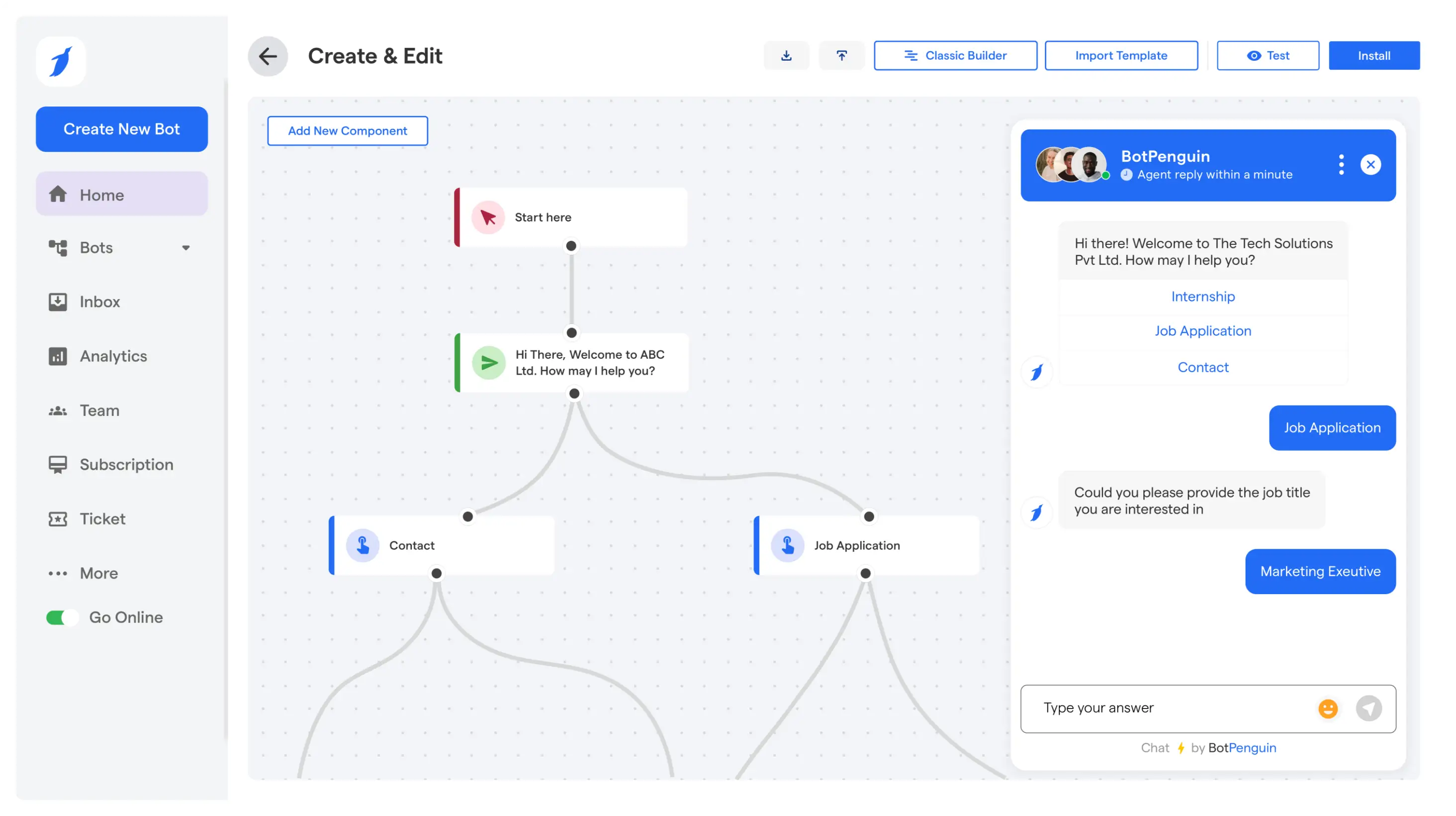
BotPenguin in particular offers a structured chatbot reseller program. Resellers can manage multiple client accounts from a centralized dashboard, set their own subscription pricing, and retain up to 100% of partner revenue share.
For agencies or consultants who already serve SMB clients, adding an AI chatbot & AI Agents to their service stack is often a natural upsell.
5. Cybersecurity Software
Examples: McAfee, Norton, Bitdefender, CrowdStrike
High-value, high-urgency category. IT service providers and MSPs dominate this space. Margins of 25-40% plus strong service revenue potential from compliance consulting.
6. HR Tech and Workforce Management
Examples: BambooHR, Workday, Rippling, Gusto
HR tech reselling suits consultants who already advise businesses on people operations. Implementation services (payroll setup, HRIS migration) dramatically improve blended margins.
7. Vertical SaaS
Industry-specific software, real estate property management tools, healthcare practice management systems, and education LMS platforms are the highest-margin opportunities for resellers with deep domain expertise.
Competition is lower, clients are stickier, and specialization justifies premium pricing.
How to Start a Software Reseller Business: Step-by-Step Process
To start a software reseller business: choose a niche, partner with a vendor, set up your legal structure, build a sales channel, define your pricing, and close your first clients. Here is the full process, step by step.
Let’s break down each of these steps in detail below:
Step 1: Choose Your Niche
Do not try to sell software to every business. The most profitable resellers are known for one thing in one market.
Ask yourself:
- What industry do I have existing relationships in?
- What software pain points do those businesses complain about?
- Where can I credibly position myself as an expert - not just a vendor?
Narrow the scope. "I sell software to small businesses" is not a niche. "I help dental clinics automate patient communication and appointment booking" is. The second version has a clear buyer, a specific problem, and an obvious solution category.
Step 2: Research and Select Your Vendor Partner
Once you know your niche, identify software vendors that serve that niche and offer reseller programs. Evaluate each program on:
And there are platforms out there who offer all these benefits to their resellers. For example, BotPenguin provides resellers a partner dashboard, assisted onboarding, marketing resources, and recurring commission options, which makes it easier to start selling without building the product yourself.
Apply to two or three programs before committing. Run the products yourself for 30 days before selling them to clients. You cannot sell what you do not understand.
Step 3: Handle the Legal and Business Structure
Do not skip this step. Many resellers operate informally until they land their first large client - and discover the vendor contract they signed has termination clauses or territorial limits they did not read.
Here’s what you need to do:
- Choose a Business Entity: An LLC is the standard for US software resellers. It limits personal liability and is simple to maintain.
- Register Your Business Name: If you intend to “white-label”, your brand name matters; register it.
- Review the Reseller Agreement Carefully: Key clauses to examine: Pricing authority, termination rights, IP ownership, and confidentiality obligations.
- Get Business Insurance. Errors and omissions (E&O) insurance protects you when offering implementation or advisory services.
Step 4: Build Your Sales Channel
You need a place where prospects can find you, evaluate your offering, and move toward a conversation. At minimum, build:
A website optimized for your niche: Not a generic "we sell software" site, but a site that speaks directly to your target buyer's problem.
A demo environment: Clients buy software they have tried. Set up a live demo of the product, show it to your prospects, and achieve higher close rates.
A lead-capture system: If your website gets traffic, do not let visitors leave without capturing their email addresses.
Step 5: Define Your Pricing Model
This is where most new resellers leave money on the table. Two common approaches:
Cost-Plus Pricing: Take your vendor’s wholesale cost and apply a markup. Agencies typically target a 40-50% gross margin on software licenses.
Value-Based Pricing: Price based on what the outcome is worth, not what the software costs.
Built-in service revenue. License fees alone are thin. Add:
- One-time setup fee
- Monthly management or support retainer
- Training and onboarding packages
- Integration and customization services
For instance, a client paying $100/month in licenses + $200/month in managed services is worth nearly 3x a pure license customer, and is far less likely to churn because they rely on you for ongoing value.
Step 6: Close Your First Clients
Your first five clients will not come from inbound SEO or paid ads. They will come from your network. Before you spend a dollar on marketing, do this:
- List every business owner, manager, or decision-maker you know personally.
- Identify which ones have the problem your software solves.
- Reach out individually, not with a mass email, and offer a free 30-minute audit or demo.
- Deliver value in that conversation before asking for anything.
Your first clients will be won by trust, not by brand. Once you have three or four reference clients with documented results, your inbound strategy and referral engine can take over.
Now that you have understood the typical process, it’s time to look at how to become a software reseller and set up your business without any technical skills.
How to Become a Software Reseller Without a Tech Background
The model is simple: The vendor handles the technology. You handle the relationship.
Becoming a software reseller is open to almost anyone with an existing client base or a clear target market. The most successful resellers come from:
- Digital marketing agencies: Adding software to their service stack
- IT consultants and MSPs: Expanding from hardware/support to SaaS distribution
- Freelancers: Productizing their expertise through a software solution
- Business coaches and consultants: Helping clients implement tools in their area of advisory
- Content creators and influencers: Building affiliate or referral income from their audience
What Skills Actually Matter
Technical depth is a bonus - but most modern SaaS products are designed to be no-code or low-code specifically because vendors want non-technical resellers to sell them.
What You Actually Need to Start
- A vendor partner with an active reseller program
- A clear niche with identifiable buyers
- A demo environment (usually provided by the vendor)
- A basic website or LinkedIn presence
- Time - most resellers land their first client within 30-60 days of properly starting.
And once your business is up and running, the next step is to focus on the strategies that actually drive revenue.
How to Make Money Reselling Software: Pricing & Profit Strategies
Software resellers make money through four primary revenue streams: licensing margins, setup fees, monthly managed services, and upsells. The best reseller businesses stack all four.
Revenue Stream 1: Licensing Margins
The core of the model. You buy at wholesale, sell at retail. On SaaS:
- Authorized resellers typically earn 20–35% margins.
- White-label resellers keep 100% of the gap between their cost and their price.
For example, on a base of 50 clients paying $150/month, a 40% margin yields $3,000/month in recurring licensing income alone.
Revenue Stream 2: One-Time Setup Fees
Every new client needs their software configured, integrated with their existing tools, and trained on. Charge for it. Depending on complexity:
- Simple chatbot or automation setup: $500-$1,500
- CRM implementation: $2,000-$8,000
- Enterprise software onboarding: $5,000-$25,000+
This fee is non-recurring but materially improves cash flow as you scale.
Revenue Stream 3: Monthly Managed Services
Instead of handing clients the software and wishing them luck, offer to run it for them. This is the "done-for-you" model: you manage configurations, monitor performance, run reports, and make monthly optimizations.
It also dramatically reduces churn: clients who rely on you for ongoing management almost never leave.
Revenue Stream 4: Upsells and Add-Ons
After a client is live and seeing results, expand:
- Additional licenses or seats
- Premium features or higher-tier plans
- Integration with additional platforms
- Staff training workshops
- Annual contract discounts in exchange for an upfront payment
What Margins Are Realistic?
Per research across the white-label software reseller market, realistic profit margins range from 40% to 80%, depending on your model and execution. That range assumes you are adding services on top of licensing, not just passing through licenses at a thin markup.
For Context: A reseller with 30 managed clients, each paying $400/month (licensing + management), generating a 50% blended margin, earns $6,000/month in profit from that cohort.
Scaling to 100 clients costs the same as $20,000/month, without hiring a development team or building a product.
The #1 Mistake That Kills Margins
Underpricing to win clients. New resellers routinely set prices low to compete, then find they cannot raise them later without losing accounts.
Price based on the value the software creates for the client, not on what you wish you could charge or what a competitor is charging for a different product for a different buyer.
When the launch and monetization strategies are in place, the focus shifts to how you’ll consistently attract and convert customers through effective marketing.
How to Market Your Software Reseller Business
To market a software reseller business, focus on three channels: content that educates your target buyer, outbound that reaches decision-makers in your niche, and a lead system that qualifies prospects automatically.
Content Marketing and SEO
Write for your buyer's questions, not your product's features.
If you resell HR software to staffing agencies, write about "how staffing agencies reduce time-to-fill," not "why our HR software is great." The former gets found. The latter does not.
Content that consistently generates reseller leads:
- Comparison guides ("HubSpot vs. Salesforce for real estate agencies")
- How-to articles tied to common problems in your niche
- Case studies from clients who got measurable results
- YouTube tutorials showing the software solving specific problems
SEO compounds over time. It takes 4-6 months to start generating consistent organic leads, but those leads cost you nothing per click once the content ranks.
LinkedIn Outbound
For B2B software resellers, LinkedIn is the most direct path to decision-makers. A focused outbound sequence includes the following steps:
- Connect with a targeted prospect (operations managers, founders, or department heads in your niche).
- Lead with a useful observation or insight - not a pitch.
- Offer something valuable for free: a short audit, a walkthrough, a resource.
- Book the conversation.
How does a LinkedIn outbound effort typically play out?
Response rates for well-personalized LinkedIn outreach in niche markets typically run 10-20%. Even at 10%, 100 connection requests per week = 10 conversations. Two or three of those convert to clients.
Lead Capture on Your Own Website
Your website should automatically capture leads, not just wait for someone to fill out a contact form.
The most effective approach for software resellers: deploy a chatbot on your own site that asks qualifying questions (what is your business, what problem are you trying to solve, how many employees do you have?) and route top leads directly to your calendar.
Referral and Partnership Loops
Your best source of new clients will always be happy existing clients. Build a referral program:
- Offer a free month or a cash incentive for each referral that converts.
- Ask for referrals 60-90 days after onboarding, when client satisfaction is highest.
- Partner with adjacent service providers (web designers, bookkeepers, marketing consultants) who serve the same buyer and can refer to you.
In the next section, we’ll look at where most new resellers go wrong, and how to steer clear of reselling mistakes.
What Can Go Wrong When Starting a Software Reselling Business?
Starting a software reseller business is easier than building software, but it still has execution risks. Most problems come from poor vendor selection, weak positioning, unclear contracts, or lack of onboarding support.
Here’s what that means in practice:
Thus, avoiding these common mistakes helps you build a more stable reseller business, retain clients longer, and create consistent, predictable revenue as you grow.
Wrapping Up
A software reseller business is one of the most practical ways to build recurring revenue without product development risk. The model works when you combine the right niche, a reliable vendor, and a clear value layer through services and positioning.
Execution matters more than entry. Those who treat reselling as a consultative business, not just license distribution, consistently outperform.
As AI-driven tools and automation platforms expand, categories like chatbot and AI agent reselling present additional margin opportunities for forward-looking resellers exploring scalable offerings.
Frequently Asked Questions (FAQs)
How to become a software reseller?
Choose a niche, partner with a software vendor offering a reseller program, set up your business, define pricing, build a sales channel, and start acquiring clients through your network.
How much does it cost to start a software reseller business?
Starting a software reseller business typically costs $500–$3,000, far less than building software from scratch, which can cost $50,000–$500,000+.
How do software resellers make money?
Through four channels: licensing margins, setup fees, monthly managed service retainers, and upsells. The most profitable resellers stack all four revenue streams per client.
Do I need technical skills to become a software reseller?
No. Most reseller-focused SaaS platforms require only basic digital literacy. Vendors provide setup guides and support. For complex integrations, you can hire a freelance developer.
What software is most profitable to resell?
Top categories in 2026: AI and automation tools, vertical SaaS, CRM platforms, and marketing automation. Profitability improves most when you add managed services on top of licensing.
Is software reselling legal?
Yes. It's a well-established model used by Microsoft, Adobe, Salesforce, and thousands of SaaS vendors. Simply comply with your reseller agreement and only resell software you're authorized to sell.
How long does it take to make money as a software reseller?
Most resellers land their first client within 30–60 days. Reaching $5,000–$10,000/month in recurring revenue is realistic within the first year with a focused niche.