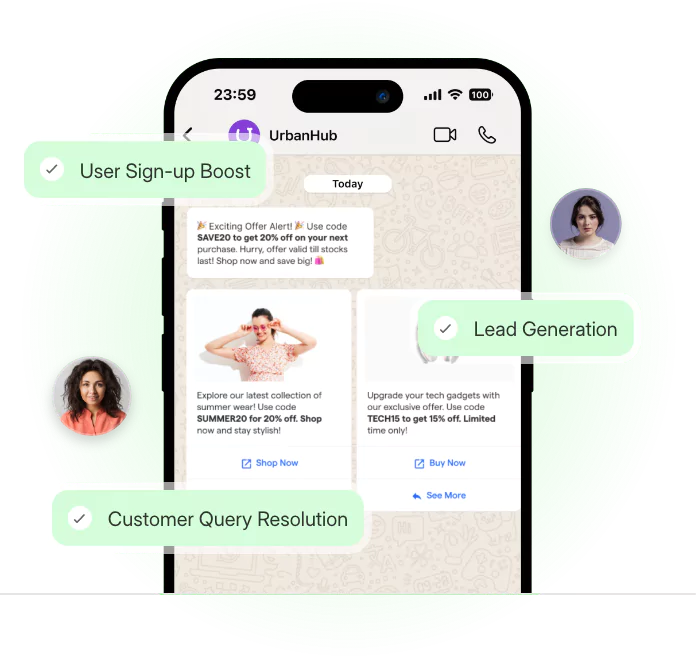



WhatsApp is no longer just an app.
For most customers, opening WhatsApp feels more natural than checking email or visiting a website. Conversations happen faster. Expectations are higher.
And businesses are starting to catch up.
WhatsApp for business is not just about sending messages. It’s about showing up where your customers already are and making communication effortless.
In this guide, you’ll learn what WhatsApp for business is and how to use it to simplify conversations, automate responses, and scale customer communication without adding complexity.
What is WhatsApp for Business? A Simple Overview
WhatsApp for business is a communication platform that helps businesses connect with customers using messaging, automation, and tools designed for sales, support, and engagement at scale.
According to Chatarmin research, businesses that adopt WhatsApp for customer service report response efficiency gains of up to 225%.
Understanding the WhatsApp Business App
The WhatsApp Business App is a free mobile app built for small businesses. It helps manage basic customer communication without a complex setup.
For example, a fashion store owner can simply replace scattered DMs and missed calls with one organized WhatsApp inbox, complete with quick replies and automated greetings.
- Key Capabilities: Includes a business profile, instant replies, chat organization with labels, and simple automation like greeting and away messages to handle basic interactions efficiently.
- Best for: Solopreneurs, local shops, and small teams handling low message volumes
Exploring WhatsApp Business API
The WhatsApp Business API is designed for medium to large businesses that need scale, automation, and integrations. It doesn’t have a front-end app and requires a platform provider.
- Key Capabilities: Automated messaging and chatbots, multi-agent support, CRM and tool integrations, high-volume messaging with templates, and access to official business verification (green tick)
- Best For: Growing businesses managing large customer conversations
WhatsApp Business Solution
A WhatsApp Business solution refers to third-party platforms that build on the API to provide a complete system.
Typically includes:
- No-code chatbot builders
- Shared team inbox
- Campaign and broadcast tools
- Analytics and reporting
It simplifies setup and helps businesses run WhatsApp as a full communication channel.
Already thinking about implementation? BotPenguin lets you set up WhatsApp automation, chatbots, and team inboxes — without writing a single line of code.
Why Businesses Use WhatsApp for Customer Communication
The first question that arises in this context is: Why WhatsApp? For businesses, it is a way to reach clients where they’re most comfortable.
The chances that your customers will open your text or email vs. WhatsApp messages are worlds apart! (email averages 20%, while WhatsApp hits 98%)
Here’s why organizations are leaning towards the Meta platform:
Faster and Direct Communication
No inbox clutter. No waiting cycles. Just a quick back-and-forth that feels like a real chat, helping businesses resolve queries and make decisions faster.
High Engagement and Response Rates
People actually open and reply here. Messages don’t get ignored, which means better visibility, quicker responses, and stronger customer attention.
In fact, 88% of WhatsApp messages are read within 5 minutes of delivery. (Source: Infobip)
Scalable Customer Interaction
Handle hundreds or thousands of chats without chaos. With the right setup, teams can manage volume smoothly while still keeping conversations personal.
The question, therefore, is no longer whether to use WhatsApp for business. It’s how fast you can get started.
WhatsApp Business App vs WhatsApp Business API: A Comparative Analysis
WhatsApp Business is built for simplicity and quick setup, while the business API is designed for scale, automation, and structured communication.
The table below lays out the core distinctions between the two:
Points Worth Remembering
- Think of the App as a starter kit and the API as the full engine: same platform, very different horsepower.
- The green tick verification badge is only available via the API, which adds credibility to business communication.
- Switching from App to API doesn't mean starting over. Your number and history can carry forward with the right provider.
Built for Success: Key WhatsApp Business Features Worth Knowing
WhatsApp gives you simple but powerful tools to manage conversations without making things complicated.
These features help you stay responsive, organized, and consistent as your customer interactions grow.
Business Profile and Catalog
Your profile works like a quick intro to your business. Add key details and showcase products so customers can explore options directly within the chat.
Pre-Written Replies and Auto Messages
Avoid typing the same answers again and again. Save common responses and set up basic auto-messages to handle queries even when you’re not around.
Message Templates
Send structured messages like confirmations, reminders, or updates at scale. These keep communication clear and consistent, especially as volume increases.
For instance, you can send a payment reminder, a delivery update, or a post-purchase thank-you - all without typing a single message manually.
Broadcast Messaging
Share updates, offers, or announcements with multiple contacts at once - without losing the personal feel of one-on-one conversations.
Did you know? WhatsApp broadcasts consistently hit open rates of 40-70%, compared to just 20-30% for email. That's a gap worth noting.
Multi-Agent Support
When messages increase, teams can step in together. Shared access helps manage conversations smoothly without overlap or missed replies.
Analytics and Insights
Get a clear view of how your messages are performing. Track responses and engagement to improve how you communicate over time.
Remember: WhatsApp analytics don’t just tell you who opened your message, they tell you who didn't. Which is basically the business equivalent of knowing who left you on read.
WhatsApp Business Premium Features
Premium adds extras like custom short links and better device access, helping you create a more polished and flexible setup. Some of these include:
- Custom WhatsApp links to make it easier for customers to start a chat
- More device access, so multiple people can handle conversations
- Enhanced profile options for a more professional business presence
Curious to learn more? Read our comprehensive guide on WhatsApp premium features for businesses.
Got it—this needs more flow and less “corporate table energy.” Let’s loosen it up while keeping it sharp.
Real-World Business Use Cases of WhatsApp That Drive Results
Whether you're closing a sale, resolving a complaint, or reminding someone about their appointment - WhatsApp fits everything into one familiar chat window that your clients use every day.
Reflecting the significance of these real-world applications, WA-CRM states that over 175 million customers message business accounts on WhatsApp daily - proof that customers don't just tolerate WhatsApp for business; they actively choose it.
Which use case fits your business?
- E-commerce → Order updates & promotional campaigns
- B2B → Lead qualification & follow-ups
- Service businesses → Appointment reminders & support
- Healthcare → Reminders, updates & feedback collection
The common thread? Meeting customers where they already are.
How to Implement WhatsApp for Business: From Setup to First Message
Here’s how businesses actually get started and make WhatsApp work without overcomplicating things:
- Set Up Your Business Profile: Add clear, complete details, including business name, description, hours, and contact info. This builds trust and helps customers know who they’re talking to.
- Organize and Segment Customers: Group chats using labels or CRM tags. Segmenting customers makes it easier to send relevant messages instead of one-size-fits-all replies.
- Create Message Templates: Prepare common messages like confirmations, reminders, and follow-ups. This saves time and keeps communication consistent as conversations grow.
- Set Up Automation Workflows: Automate greetings, responses, and routine actions. This helps you stay responsive without being available 24/7.
- Track and Optimize Performance: Monitor replies, engagement, and response time. Use these insights to refine your messaging and improve how you interact with customers over time.
None of these steps requires technical expertise. Most businesses are fully set up and messaging customers within a day. The key is starting with the right foundation and building from there.
WhatsApp Business Automation: Less Manual Work, More Meaningful Conversations
Automation is what turns WhatsApp from a simple chat tool into a system that runs conversations for you, without losing speed or context.
Other Important Areas to Address
- Enable Chatbots and AI Responses: Deploy AI-powered bots that understand customer intent, answer questions instantly, and guide users through workflows, all without a single human typing a word.
- Set Up Human Handoff: When a conversation gets complex or emotionally charged, automation steps aside and routes the chat to a live agent. Done smoothly, with full context intact, so customers don’t have to repeat themselves.
If you're considering a chatbot, we've covered the full breakdown in our WhatsApp Chatbots guide - worth a read before you build.
Want to set this up without the technical hassle? BotPenguin handles all of this (chatbots, handoffs, notifications, and more) in one no-code platform.
The key is balance. Automate the repetitive parts, but keep room for human interaction where it matters most.
WhatsApp for Customer Support: Faster Resolutions, Happier Customers
Customer support works best when it’s fast, simple, and feels human. That’s exactly what WhatsApp enables. Real conversations without friction.
- Real-Time Query Resolution: Customers don’t want to wait. WhatsApp makes it easy to answer questions instantly, keeping conversations quick and decisions moving without delays.
- 24/7 Support with Automation: You don’t have to be online all the time. Automated replies and workflows handle common queries anytime, so customers always get a response.
- Improved Agent Productivity: Teams spend less time on repetitive questions and more on real issues. With better organization and faster replies, agents can handle more conversations without burnout.
- Personalized Customer Experience: Every interaction feels like a one-on-one chat. You can tailor responses based on context, history, or behavior, making support more human and less robotic.
When done right, WhatsApp doesn’t just support customers, it improves the entire experience.
Best Practices for Using WhatsApp for Business
Using WhatsApp effectively isn't just about sending messages.
There's a fine line between being helpful and being that brand customers mute. And the best practices below are what keep you on the right side of it.
Get Customer Opt-In and Follow Compliance
Always get clear permission before messaging. Respect opt-outs and follow platform rules.
Example: Ask users to opt in via a website form before sending updates.
Define Clear Business Use Cases
Be clear on why you’re using WhatsApp - support, sales, or updates.
Example: If customer support is the idea for your WhatsApp business account, use it only for order updates and support, not random promotions.
Set Up a Complete Business Profile
Add accurate details so customers instantly know who they’re talking to.
Example: Include business hours so customers know when to expect replies.
Segment and Organize Your Customers
Group contacts based on behavior or needs.
Example: Separate new leads from existing customers for targeted messages.
Use Automation Without Losing Human Touch
Automate routine replies, but step in when needed.
Example: Use auto-replies for FAQs, then hand off complex queries to a human.
Optimize Message Timing and Frequency
Don’t overwhelm users. Send messages at the right time.
Example: Avoid late-night promotions or sending multiple messages in a day.
Personalize Customer Communication
Use names, context, and past interactions.
Example: Reference a recent purchase while suggesting related products.
Use Templates and Broadcasts Strategically
Keep bulk messages relevant and valuable.
Example: Send offers only to users who have shown interest in similar products.
Track Performance and Improve Continuously
Monitor responses and engagement.
Example: Adjust message timing if open or reply rates drop.
Alongside these best practices, there are a few common pitfalls that are easy to fall into, and just as easy to avoid once you know them.
Common Challenges (and How to Avoid Them)
A few common mistakes can reduce effectiveness if not handled well:
- Over-automation → conversations feel robotic.
- Too many messages → users opt out.
- No clear consent → compliance risks
- Poor segmentation → irrelevant messages
- Slow handoff → frustrated customers
WhatsApp is a powerful channel, but only when used with intention. Get the practices right, avoid the common pitfalls, and you'll have a platform that works as hard as your team does.
WhatsApp Business Compliance and Data Privacy
Sending messages on WhatsApp comes with responsibility.
From GDPR requirements in Europe to WhatsApp's own messaging policies, businesses need to stay compliant, not just to avoid fines, but to keep the trust of every customer they communicate with.
Getting compliance right isn’t just about avoiding penalties; it builds trust and keeps your communication sustainable in the long run.
For a deeper dive into staying compliant, read our WhatsApp Business Compliance and GDPR guide.
With the compliance groundwork in place, the next step is finding a solution that brings it all together.
How to Choose the Right WhatsApp Business Solution
Not every WhatsApp solution is built the same. The right one fits your team size, your workflows, and the volume of conversations you're handling, without making things more complicated than they need to be.
Here’s what to look for:
- Automation and Chatbot Capabilities: Look for tools that can handle FAQs, route queries, and automate workflows without needing constant manual input.
- CRM and Integration Support: Choose a solution that connects with your existing tools so customer data stays in sync and conversations stay contextual.
- Multi-Agent and Team Inbox: Make sure your team can manage chats together. Shared inboxes prevent missed messages and improve response time.
- Analytics and Reporting: You should be able to track performance, like response rates, engagement, and agent activity, to keep improving.
- Compliance and Security: Pick a platform that follows WhatsApp policies and protects customer data, so you stay compliant as you scale.
The right solution doesn’t just support your WhatsApp strategy; it accelerates it.
Take time to evaluate your options against these criteria before committing, because switching platforms mid-scale is a headache nobody needs.
Wrapping Up
WhatsApp has become a natural part of how people communicate.
Companies that use WhatsApp for business meet customers where conversations already happen, and decisions are made faster.
It’s not about sending more messages. It’s about having better conversations that are timely, relevant, and easy to act on.
Start simple. Set up the basics. Then add automation and structure as you grow.
When used right, WhatsApp for business becomes more than a messaging tool. It becomes a reliable way to connect, support, and convert.
Frequently Asked Questions (FAQs)
What is WhatsApp for business?
WhatsApp for business is a platform that helps businesses communicate with customers using messaging, automation, and tools for sales, support, and engagement.
How to use WhatsApp for business effectively?
Set up your profile, segment customers, use templates, enable automation, and track performance to improve conversations and manage customer communication efficiently.
What is the difference between WhatsApp Business App and API?
The app is for small businesses with basic features, while the API supports automation, integrations, and high-volume messaging for growing or large businesses.
Can WhatsApp be used for customer support?
Yes, businesses use WhatsApp for real-time support, automated responses, and quick query resolution, making customer communication faster and more convenient.
How do businesses automate WhatsApp messages?
Businesses automate messages using chatbots, workflows, and templates to send replies, updates, and follow-ups without manual effort, ensuring faster response times.
Is WhatsApp Business free to use?
The WhatsApp Business App is free, but the API involves costs based on conversations, messaging volume, and the platform provider used.
What are the benefits of using WhatsApp for business?
It enables faster communication, higher engagement, better customer experience, and scalable interactions, helping businesses manage conversations and improve conversions effectively.